Building web applications with AI. I’m Not a Web Developer. I still ship Web Apps.
The last time I wrote anything resembling front-end code, it was 2003, and it was classic ASP. So when I tell you that back in March, I had an idea for a web app and decided to build it myself, you should remain skeptical.
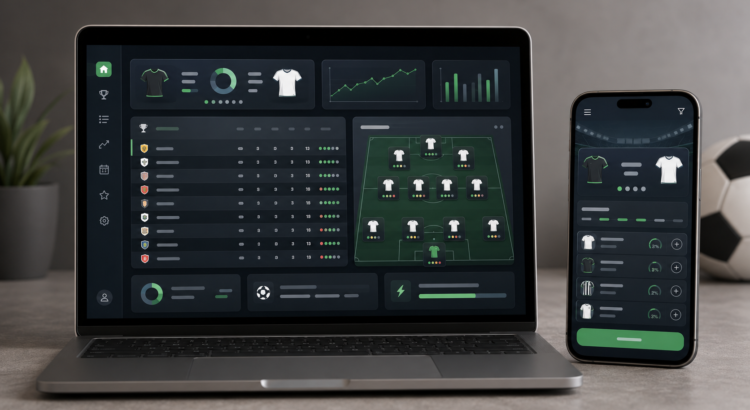
As of yesterday, June 11, the idea is a live platform with more than 500 players, integrated payments, automatic emails, real football data synchronization in the background and support for various tournaments. I built it as someone whose day job is Microsoft data and AI consulting, not web development. This is an honest explanation of what building web applications with AI is really like, where AI coding tools really work, and where they don’t.
I wrote it because the conversation I’m having with clients right now is a version of the same question: is this AI-assisted development real, or is it a demo that falls flat when you ask it to do something important? Having just taken a project from a simple idea to a working product, I have more useful answers than I did six months ago.
What I Built
The application is called Last Man Standing. The game itself is simple but interesting: It’s based on a real-life sports game. Initially, the English Premier League, but now it’s the World Cup, and if this works out, I’ll consider the NFL in the fall. How it works: each round, you choose one team to win. If they win, you’re safe. If they lose or draw, you are out. The interesting thing is that you can’t pick the same team twice, so the strategies grow as the season or game progresses, and your options get thinner. The last player standing takes the pot/prize.
That’s the point of the game. That evolved into a football competition platform that now runs three formats side-by-side, survivor games, points-based leagues that keep eliminated players involved even when they lose, and raffles for offices, pubs and fundraisers. It’s launching into 2026 World Cup mode, which means it supports international tournaments alongside domestic football, with all the data model upheaval that implies. My vision for this is a platform that can be used by grassroots youth football teams, clubs and other fundraising organizations as a way to generate funds to support their activities. More on that in another post.
None of it is particularly interesting, at least for this post. What’s interesting is how it was built.
Stacks, and “Vibration Code” Reality.
The platform is a React and TypeScript front end on a PostgreSQL-powered serverless architecture, built on Supabase, with Claude Code doing much of the heavy lifting on the actual coding. There is no traditional web server to babysit. Authentication, security, and business logic are delivered through managed services and serverless functions. Equipment data is automatically synced from external providers, with scheduled background jobs taking care of competition progress, notifications and admin.
On paper, it’s a modern cloud-native design that makes a lot of sense. Honestly, I don’t sit down and design everything on day one like a seasoned web engineer or architect. Much of this comes through conversations with AI tools, knowledge of data platforms, and a willingness to repeatedly make mistakes until the form is right.
This is what people mean by “vibrational coding,” and the term does a disservice to the practice. It makes it sound like you wave your hand and the software appears. You do not. You make hundreds of small decisions, you reject many AI proposals, and you assume full architectural responsibility.
Where AI Really Gains
I want to be more precise here because the value is real and specific.
The speed goes from zero to working rotation. Within the first week I had user accounts, competitions, teams, match schedules, rounds, player selection and elimination logic all working. Players can join, choose a team, and advance or be eliminated based on real results. As a solo non-developer, achieving a working core game loop in a matter of days, not months, is the difference between a project that gets done and one that stays on my phone.
Filling in the gaps in my own knowledge. I know the data. I don’t know the current React state management idioms or the finer points of serverless function design. AI tools allow me to operate above my front-end skill level without pretending that I suddenly gained ten years of experience. This is the closest thing I have to a pair programmer who never tires of my basic questions.
Boilerplate, plumbing and boring 80%. Email confirmations, reminders, equipment synchronization, scaffolding around payments. An uninteresting machine that makes a product usable, not a tech demo. These are the jobs that AI is good at, and the ones that usually eat side projects alive.
Who Still Needs Me
This is the part that hype traders skip.
Architecture is on me. AI will happily generate code for anything you ask, including designs that will cost you money in three weeks. Deciding how the data model should be structured, the boundaries between competitions and tournaments, and how to keep it scalable. That assessment comes from twenty years of working with data platforms, not on impulse.
The rules of the business are mine. Football is full of complicated cases. Extra time. Penalty shootout. A draw eliminates a safe selection but scores differently in the league. The team you are already using. The AI won’t know your rules until you think about them clearly enough to determine them, and thinking them clearly is most of the real work.
The test and trust are in me. When real money is put in through entry fees, “it seemed to work when I tried it” isn’t enough. One should care whether the elimination logic is correct in the game is important. That someone is me and it is still in the testing phase to go live here
The axis is on me. The biggest change in the overall build is moving from a Premier League-only app to a multi-tournament platform that can handle the World Cup. If this works, we will bring you the next NFL. This touches the data model, business rules, and interface all at once. There is no tool to make those decisions or absorb their consequences. Yes, and I had to revisit previous choices to make it work.
AI speeds up development dramatically. This does not replace the engineering judgment that decides what to build, what it will look like, and whether it is trustworthy.
Building Shape
One thing worth pointing out clearly is how non-linear it is. The roadmap below looks neat if you think about it. In reality, most of this emerges from testing and feedback, not from a master plan.
- March: The core game, then payouts, emails, league points and initial analysis such as expected goals and win probability.
- April: World Cup support, referral codes, in-competition messaging and the first real automation.
- Possible: Security hardening, caching, sweepstakes module, and launch preparation.
- June: Invitation code, live statistics, rules page, onboarding pattern and last 600 players.
If there’s one lesson in that sequence, it’s that building software is rarely a straight line. New ideas emerge from testing and user feedback. One of my competition organizers and the manager of the DMC Hamburg team, once they set it up, came up with a lot of great ideas. Many thanks to the team there for their input. User feedback reorders priorities. Big changes forced me to return to previous decisions. It wasn’t a failure of planning. That’s what real delivery looks like, and AI tools don’t change that. In fact, this makes the cost of changing direction lower, meaning you change direction more often.
What It Means When You Lead a Delivery Team
Take away football, and there’s a commercial point here that applies directly to the teams I work with.
AI-assisted development is a real thing, and it is changing what a small team or determined individual can do. Increasing productivity is not marketing. I live it. A project that would have been uneconomical if built the old way became a reality on weekends and evenings.
This does not eliminate the need for engineering discipline. That moved him. Less time typing boilerplate, more time on architecture, business rules, testing, and scoring. The hard part. If your team has those skills, AI will make them faster. If your team lacks it, AI helps them produce more code that they can’t evaluate properly, which is a different and worse problem.
The winners are the ones who pair domain knowledge with these toolsS. I’m not a web developer, but I understand the domain, the data, and the football, well enough to navigate the tool and catch it when things go wrong. It is the combination, not the tools themselves, that produces a product.
The amazing version of this story is “anyone can build anything now”. The honest version is more useful: things have improved, the pace has changed, and the responsibilities haven’t shifted one bit. That’s the version I want the client to plan.
Want to Make AI Really Work in Your Business?
Building Last Person Standing was a personal project, but it’s the clearest evidence I have of the same thing I do to help organizations every week: getting real, useful results from AI versus impressive demos that can’t stand up to the rigors of production. If you’re trying to figure out where AI-assisted development really fits into your delivery, and where it’s silently costing you money, that’s the conversation I’m having. See how AI enablement works together, or contact us and we’ll talk about it.
PakarPBN
A Private Blog Network (PBN) is a collection of websites that are controlled by a single individual or organization and used primarily to build backlinks to a “money site” in order to influence its ranking in search engines such as Google. The core idea behind a PBN is based on the importance of backlinks in Google’s ranking algorithm. Since Google views backlinks as signals of authority and trust, some website owners attempt to artificially create these signals through a controlled network of sites.
In a typical PBN setup, the owner acquires expired or aged domains that already have existing authority, backlinks, and history. These domains are rebuilt with new content and hosted separately, often using different IP addresses, hosting providers, themes, and ownership details to make them appear unrelated. Within the content published on these sites, links are strategically placed that point to the main website the owner wants to rank higher. By doing this, the owner attempts to pass link equity (also known as “link juice”) from the PBN sites to the target website.
The purpose of a PBN is to give the impression that the target website is naturally earning links from multiple independent sources. If done effectively, this can temporarily improve keyword rankings, increase organic visibility, and drive more traffic from search results.