Microsoft Foundry, AWS Bedrock, Google Vertex AI: The Real Difference in Building Agentic AI
I spent this week teaching AI-901, and if you’ve taken the course recently, you’ll know that the syllabus has shifted to Microsoft Foundry. Not Copilot. Not a chatbot. Casting. A platform for selecting models, installing tools and data, and sending actual agents who do things on your behalf. Some might call it an AI Agent.
That’s the change I see. Many of the client conversations I have these days are not “can we use AI.” It is “which platforms we build our agents on, and why.” So, let’s talk: what exactly is Microsoft Foundry, and how does it compare to AWS Bedrock and Google Vertex AI, two other “foundry-type” platforms that do the same job in other clouds.
What exactly is Microsoft Foundry
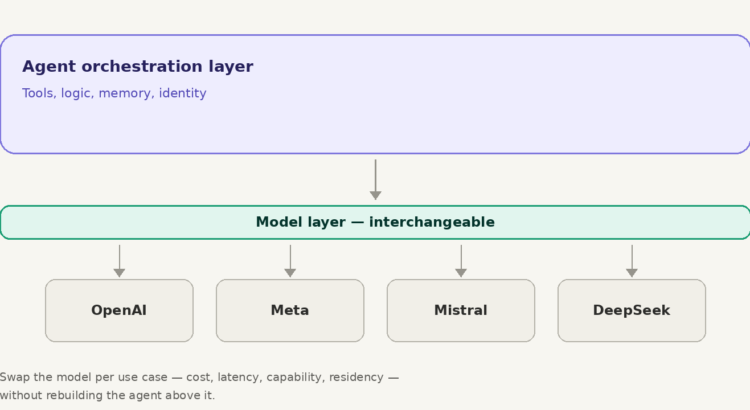
Microsoft Foundry (also referred to as Azure AI Foundry in older documents and exam materials) is Microsoft’s unified platform for building, evaluating, and deploying AI agents and models. It’s easy: choose a model from a catalog that includes OpenAI, Anthropic/Claude Meta, Mistral, DeepSeek, and Microsoft’s own models, adapt it to your data, provide tools, and deploy as an agent. And you can do it all in one managed environment connected across your Azure regions.
What AI-901 candidates need to understand is not clicking a button. Here’s the crux of the architecture: Foundry separates models from agents. You’re not locked into GPT-anything. You choose a model per use case, considering factors such as cost, latency, capabilities, data residency, and so on. Agent logic is top-of-the-line, largely model-agnostic. That’s the commercially interesting part, not the model catalog itself.
The three casting platforms, compared
Microsoft Foundry
Strongest when the client is already an Azure and Microsoft 365 shop. The integration with Entra ID for agent identity, with Fabric for data grounding, and with Copilot Studio for low-code agent creation is really hard for the other two to match if your data already exists in those ecosystems. The choice of models is wide and growing rapidly. The governance tools, content security, evaluation, search, are mature and audit-friendly, which is more important than most vendors admit once you get past the demo stage.
AWS Bedrock
The gaming equivalent of Bedrock is Bedrock Agents, which builds on the same multi-model catalog idea — Anthropic, Meta, Amazon’s Titan/Nova models, Mistral, and others. Bedrock’s advantage is infrastructure maturity: if a client is already deep into AWS for compute, storage, and IAM, the operational fit is excellent. It’s less perfect for low-code/business users than Copilot Studio, and the agent orchestration tool has historically felt more developer-centric than Microsoft’s.
Google Vertex AI (Agent Builder)
Vertex AI’s Agent Builder leans most towards Gemini, although it supports other models. The real strength is the foundation of search and retrieval — Google’s legacy shows. For clients who are heavily invested in BigQuery and Google’s data stack, or want best-in-class RAG, this is a serious contender. This figure is the weakest of the three in terms of corporate governance maturity at the time of writing, although the gap will narrow.
The takeaway: model catalogs are no longer a differentiator
This is where I constantly correct people in training sessions. Everyone was excitedly comparing the list of models — “is there Claude, is there Llama, is there DeepSeek.” Stop. All three platforms now offer credible multi-model access. The race is mostly over and the grades no longer matter.

The real decision criteria are: where does your data already exist, what is your current identity and governance model, and who builds the agents – developers, or business analysts using low-code tools? Microsoft wins on the third point for most of my client base, because Copilot Studio actually lets competent business analysts build functioning agents without a developer in the room. Bedrock and Vertex still have higher technical capabilities by default.
If you’re evaluating platforms today, don’t start with the model catalogue. Start with your estate data and governance requirements, then determine which platform creates the fewest obstacles for agents to produce safely.

Where to go next
If you are considering which platform to use to build your agency strategy. Or your team needs to go from “we’ve heard of Foundry” to “we’ve delivered a production agent”, then that’s the kind of engagement I run. Check out the AI enablement consultations and workshops I provide, or contact us and we’ll talk about what suits your needs.
Useful Links
Will AI Replace Us? The Chairman’s Answer I Never Gave
AI Empowerment Operating Model | Gethin Ellis
Microsoft Agentic AI Stack: Where to Build AI Agents
PakarPBN
A Private Blog Network (PBN) is a collection of websites that are controlled by a single individual or organization and used primarily to build backlinks to a “money site” in order to influence its ranking in search engines such as Google. The core idea behind a PBN is based on the importance of backlinks in Google’s ranking algorithm. Since Google views backlinks as signals of authority and trust, some website owners attempt to artificially create these signals through a controlled network of sites.
In a typical PBN setup, the owner acquires expired or aged domains that already have existing authority, backlinks, and history. These domains are rebuilt with new content and hosted separately, often using different IP addresses, hosting providers, themes, and ownership details to make them appear unrelated. Within the content published on these sites, links are strategically placed that point to the main website the owner wants to rank higher. By doing this, the owner attempts to pass link equity (also known as “link juice”) from the PBN sites to the target website.
The purpose of a PBN is to give the impression that the target website is naturally earning links from multiple independent sources. If done effectively, this can temporarily improve keyword rankings, increase organic visibility, and drive more traffic from search results.